The Pioneering Era: Early Foundations (1930s-1960s)
The foundations of air quality modelling can be traced back to the 1930s with the groundbreaking work of Sutton (1932) and Bosanquet (1936), who began developing mathematical descriptions of pollutant diffusion in the atmosphere. These early efforts focused on understanding the fundamental physics of how pollutants spread from point sources, laying the groundwork for all future modeling developments.
The modern era of air quality modeling truly began with Gaussian plume models in the 1960s, which provided the first practical mathematical framework for estimating pollutant dispersion from individual sources. These models were based on the assumption that pollutant concentrations follow a normal (Gaussian) distribution both horizontally and vertically from the plume centerline. Pasquill’s stability classification system became a cornerstone of these early models, with Turner (1961) offering crucial modifications that made the system practical for numerical implementation using readily available meteorological data.
A pivotal early demonstration was Turner’s (1964) simulation of sulfur dioxide emissions for Nashville, Tennessee, which proved it was feasible to combine Pasquill plume dispersion theory with Holland’s (1953) plume rise calculations and Holzworth’s (1964) mixing height concepts into a practical citywide air quality simulation model. This “proof of concept” established the foundation for regulatory air quality modeling in the United States.
Regulatory Framework Development (1970s)
The passage of the U.S. Clean Air Act in 1970 marked a watershed moment for air quality modeling, as it mandated the use of dispersion models for regulatory applications. This legislation required quantitative assessments of air quality impacts, driving the development of more sophisticated modeling tools. Early regulatory models focused primarily on non-reactive pollutants like sulfur dioxide (SO2) and carbon monoxide (CO), which could be adequately simulated using relatively simple dispersion calculations.
During this period, the Environmental Protection Agency (EPA) began developing standardized modeling approaches, with NOAA’s Atmospheric Sciences Modeling Division providing crucial technical support after relocating to Research Triangle Park, North Carolina in 1969. The STEM (Sulfur Transport and Deposition Model) development began in 1976, initially designed to address the growing concerns about acid rain and long-range transport of sulfur compounds. This model represented an early recognition that air pollution was not merely a local problem but could affect regions hundreds of kilometers downwind.
The Photochemical Revolution (1980s-1990s)
As scientific understanding of atmospheric chemistry advanced, it became clear that many important air pollutants undergo complex chemical transformations in the atmosphere. Ozone formation and acid rain emerged as major environmental concerns, driving the development of photochemical models that could simulate these complex chemical processes.
The 1980s saw the emergence of grid-based photochemical models such as the Regional Acid Deposition Model (RADM), which represented a significant advance over simple dispersion models. These models divided the atmosphere into three-dimensional grid cells and solved mathematical equations describing chemical reactions, transport, and deposition processes within each cell.
Modeling approaches diverged geographically during this period, with distinct preferences emerging in different regions:
- European modeling predominantly used Lagrangian trajectory approaches, focusing on long-range transport over large distances and extended time periods, particularly for SO₂ pollution
- U.S. modeling favored Eulerian grid models, applied primarily to urban areas for episodic ozone simulations over shorter time periods
This divergence reflected different regulatory priorities and pollution characteristics. Early influential papers by Friedlander and Seinfeld (1969), Eschenroeder and Martinez (1970), and Liu and Seinfeld (1974) established the theoretical foundations for both approaches.
The Urban Airshed Model (UAM), developed by Systems Applications International, became one of the most widely used photochemical models globally during this period. The model underwent continuous cycles of application, evaluation, and improvement throughout the 1970s and 1980s, establishing many of the practices still used in modern air quality modeling.
Third-Generation Models and Integration (1990s-2000s)
The 1990s marked the development of “one-atmosphere” models that could simultaneously simulate multiple pollutants and their interactions. The Community Multiscale Air Quality (CMAQ) modeling system, initially released to the public on June 30, 1998, represented the culmination of nearly seven years of intensive development effort. CMAQ was designed as a “third-generation” air quality modeling system, meant to replace the collection of specialized tools that had been developed for specific pollutants and applications.
CMAQ’s revolutionary features included:
- Simultaneous simulation of multiple species within the same modeling framework
- Holistic treatment of atmospheric processes rather than isolated pollutant-specific approaches
- Consistent platform for both research and regulatory applications
- Multi-scale capabilities from urban to hemispheric scales
- Integration of advanced computing technologies
Other significant models developed during this period included the Comprehensive Air quality Model with extensions (CAMx), which offered sophisticated plume-in-grid and source apportionment capabilities. The CALGRID model provided additional options for photochemical air quality assessment, particularly in California where stringent air quality standards drove innovation in modeling approaches.
Global Modeling Evolution
The transition to global-scale modeling began with two-dimensional models in the late 1970s, where the global troposphere was averaged in the longitudinal direction. Isaksen (1978) provided early insights into global atmospheric chemistry, paving the way for the first three-dimensional global models that emerged in the following decades.
The development of global models required addressing new challenges including:
– Intercontinental transport of pollution
– Stratosphere-troposphere exchange
– Global background concentrations
– Climate-chemistry interactions
Modern Era: Operational Forecasting and Data Integration (2000s-Present)
The 21st century brought revolutionary advances in computational power, satellite observations, and data assimilation techniques. Real-time air quality forecasting shifted from simple statistical post-processing to sophisticated three-dimensional models that account for meteorology, emissions, chemistry, and removal processes.
Four generations of 3-D air quality models have evolved since the 1970s, with roughly one generation per decade, reflecting advances in scientific understanding and computational technologies. Modern models incorporate:
- Satellite data assimilation for real-time emissions and boundary conditions
- High-resolution meteorological inputs from advanced weather prediction models
- Sophisticated chemical mechanisms with hundreds of species and reactions
- Advanced aerosol physics including nucleation, coagulation, and cloud interactions
The European Copernicus Atmosphere Monitoring Service (CAMS), launched in 2015, represents the current state-of-the-art in operational air quality forecasting. CAMS provides:
- Global atmospheric composition monitoring at unprecedented resolution
- Multi-day forecasts of aerosols, ozone, and greenhouse gases
- Retrospective analyses for climate and air quality research
- Support for policy decisions through consistent, reliable data products
Contemporary Challenges and Innovations
Modern air quality modeling faces several emerging challenges that drive continued innovation:
- Climate-Air Quality Interactions: Recognition that climate change significantly affects air quality through temperature effects on chemical reaction rates, changes in precipitation patterns affecting pollutant removal, and altered weather patterns affecting transport.
- Multi-scale Integration: Development of seamless modeling systems that can represent processes from street-level (meter scale) to global (continental scale) with consistent physics and chemistry.
- Machine Learning Enhancement: Integration of artificial intelligence and machine learning techniques to improve model predictions through bias correction, ensemble post-processing, and data fusion.
- Real-time Data Integration: Incorporation of increasingly diverse observational data streams, including satellite retrievals, mobile monitoring platforms, and citizen science networks.
CCMMMA Contributions to Air Quality Science and Forecasting (2003-2023)
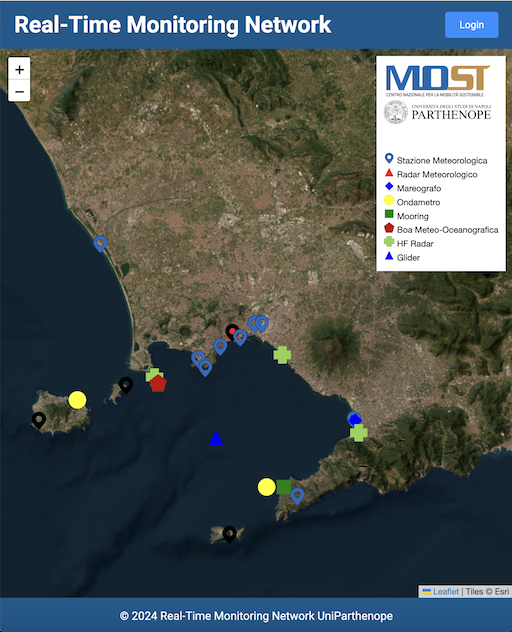
The Center for Climate and Meteorology Modeling and Monitoring Applications (CCMMMA) at the University of Parthenope in Naples has emerged as a leading institution in atmospheric modeling and air quality forecasting over the past two decades. Initially established as part of broader efforts to enhance environmental monitoring capabilities in Southern Italy, the center has evolved into a comprehensive research and operational facility that bridges the gap between advanced atmospheric and marine science and practical applications for policy support and public information.
The foundation of CCMMMA’s air quality work rests on the implementation and continuous development of high-resolution chemical transport models, particularly the CHIMERE modeling system. This choice proved prescient as CHIMERE became one of the most widely used air quality models in Europe, offering sophisticated capabilities for simulating the complex photochemical processes that govern atmospheric pollution. The center’s adaptation of CHIMERE to the specific geographical and meteorological characteristics of the Mediterranean region, particularly the Campania area of Southern Italy, represents a significant technical achievement that required extensive model configuration, emission inventory development, and validation against local observational data.
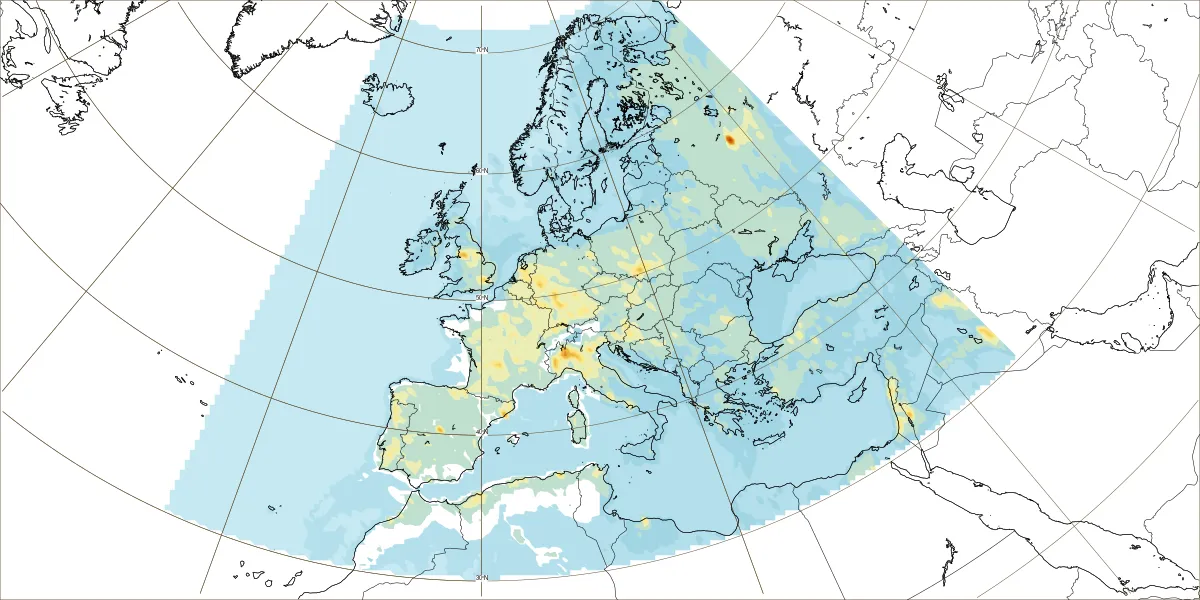
One of the most notable achievements of CCMMMA has been the development of a high-resolution air quality forecasting system that operates at both European and Italian scales. This system represents the first forecasting capability at high spatial resolution covering the entire Italian territory, with model grids extending from 20-kilometer resolution over Europe to 4-kilometer resolution over Italy.[1] The technical sophistication lies not only in its spatial resolution but also in its integration of multiple data sources, including meteorological fields from numerical weather prediction models, emission inventories that capture both anthropogenic and natural sources, and boundary conditions derived from larger-scale modeling systems.
The validation and evaluation of the modelling system against the Copernicus Atmosphere Monitoring Service (CAMS) products demonstrates the center’s commitment to scientific rigor and operational excellence. Comparative analyses show that the modelling system achieves skill scores comparable to or better than the European-scale CAMS ensemble, with particular improvements observed over the Italian domain where the higher resolution provides more detailed representation of topographical effects, urban heat islands, and local emission patterns. The annual average Root Mean Square Error Differences between Italian-scale and CAMS for key pollutants including particulate matter, nitrogen dioxide, and ozone fall within acceptable ranges that support the system’s use for both research and operational applications.
The center’s research portfolio extends beyond operational forecasting to encompass fundamental atmospheric science questions relevant to air quality in the Mediterranean region. Long-term trend analysis conducted using the center’s modeling capabilities has revealed important insights into the effectiveness of emission reduction policies implemented across Italy and Europe over the past two decades. These studies demonstrate the model’s capacity to capture observed pollutant concentration trends, providing confidence in its application for scenario analysis and policy impact assessment.
[1] Riccio, A., & Chianese, E. (2024). Accurate, reliable, and high-resolution air quality predictions by improving the Copernicus Atmosphere Monitoring Service using a novel statistical post-processing method. Atmospheric Chemistry and Physics, 24(3), 1673-1689.