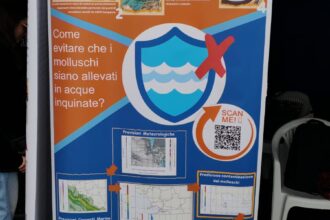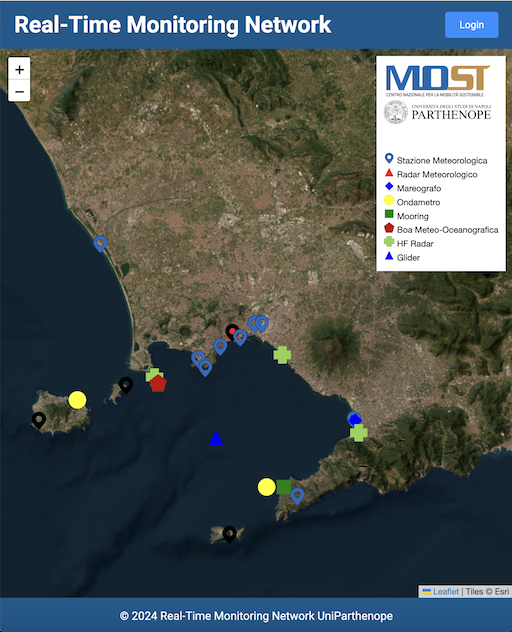
Five days spent between the monumental complex of Villa Doria d’Angri at the University of Naples Parthenope, the Conference Center via Partenope at the University of Naples Federico II, and the CNR Research Area via Pietro Castellino were dedicated to learning the methodologies and techniques underlying applications that are used daily, such as weather forecasting, sustainable energy development, and artificial intelligence.
From June 16 to 20, Naples hosted the third edition of the CINI HPC Summer School, an initiative of the National Inter-University Consortium for Informatics (CINI), specifically from the HPC Key Technologies and Tools laboratory. The goal of the school is to provide participating students with a structured overview of hardware and software methodologies and technologies used to develop High-Performance Computing (HPC) solutions.
High-performance computing is a strategic competence in today’s knowledge-based society, with massive investments being made worldwide. It can be defined as the set of technologies and methodologies required to solve large-scale scientific problems on modern supercomputers, which today are capable of performing quadrillions of operations per second. With such tools, it is possible to tackle problems with significant societal impact, such as the sudden development of extreme weather events, climate change studies, the discovery of new drugs and materials, and understanding earthquakes. Moreover, HPC is the driving force behind Artificial Intelligence applications. Italy is not lagging in this field, with two supercomputers ranked among the top ten in the Top500 List—the global ranking of the world’s most powerful systems. Through funding from the PNRR (National Recovery and Resilience Plan), a dedicated National Center has been established on these topics. Among other activities, it has installed and made operational the Leonardo supercomputer at CINECA, while ENI contributes with its HPC6 system, used for studies on the energy transition.
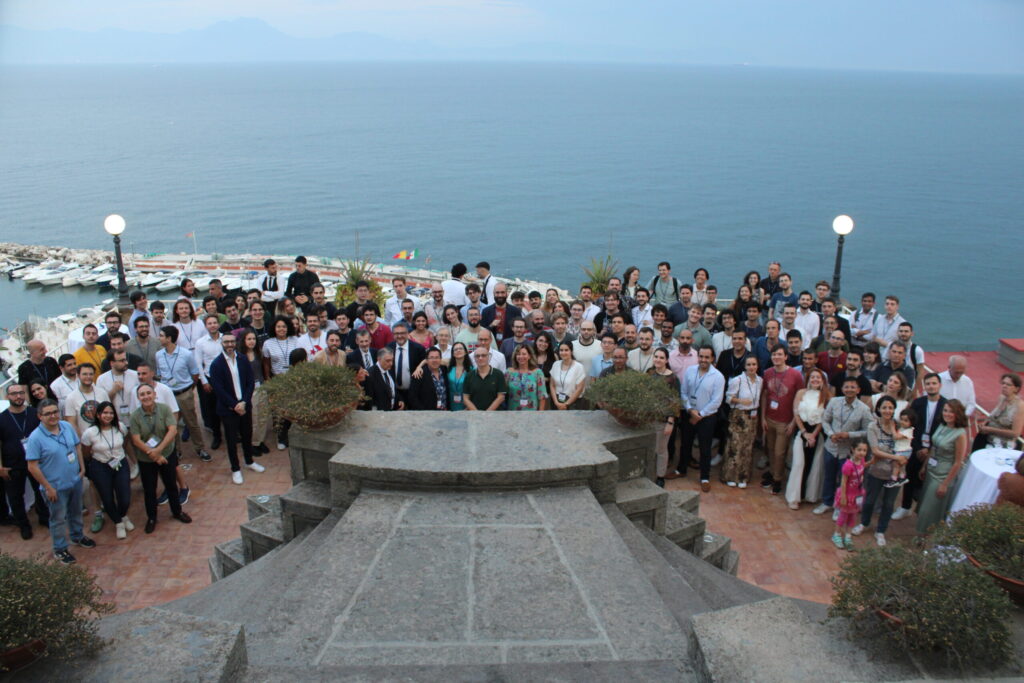
The third edition of the CINI HPC Summer School welcomed 114 selected students out of nearly 200 applications received, marking an increase of around 50% compared to the 2024 edition. It reflects the growing need for high-level training in this field and the attraction of PhD students and young researchers from around the world. The program offered not only an overview of fundamental concepts and tools but also featured presentations on ongoing research and the interaction between HPC, quantum computing, and artificial intelligence. During the lab sessions, students also had the opportunity to use the Leonardo supercomputer.
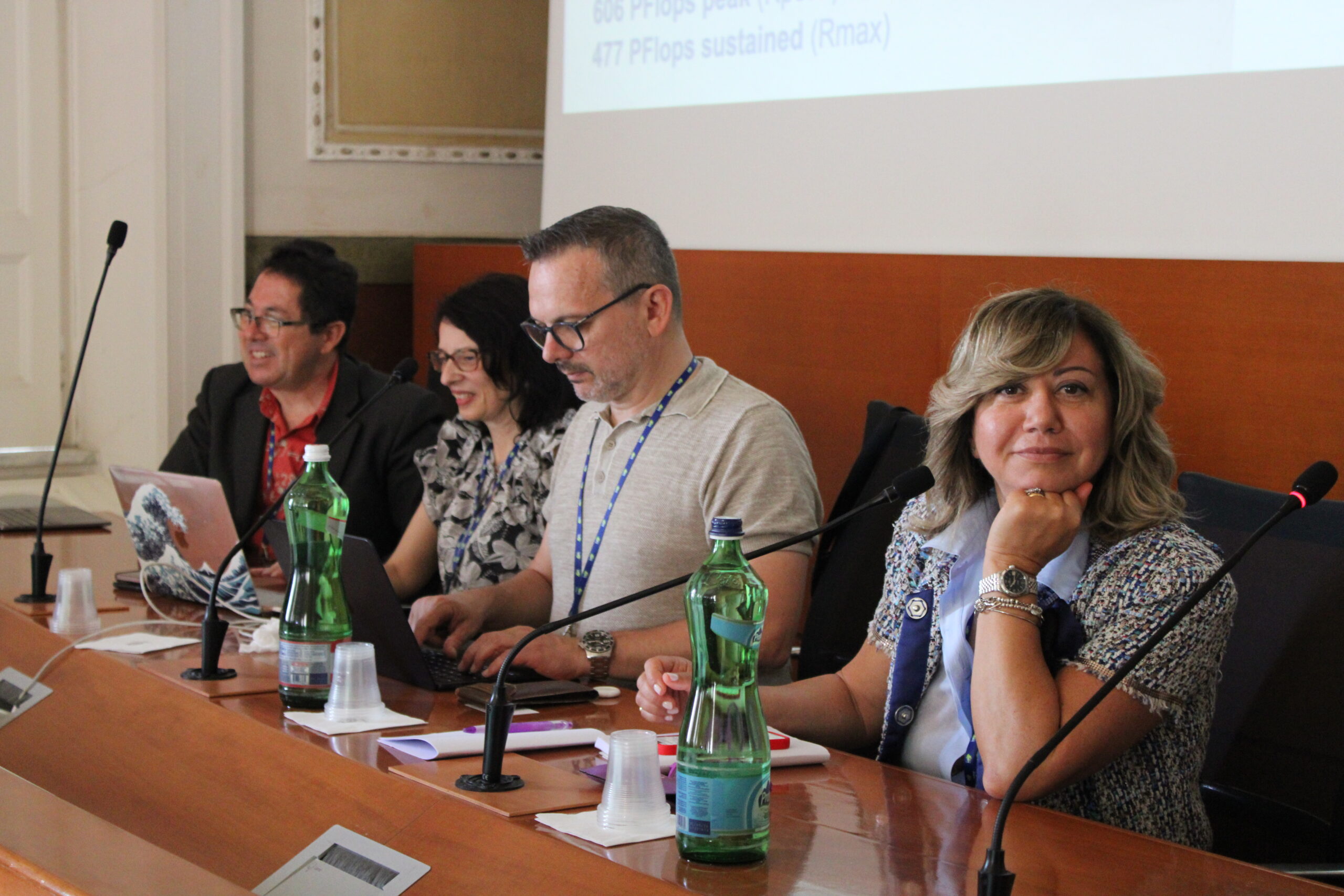
The event was jointly organized by representatives of Naples’ leading scientific institutions: Dr. Pasqua D’Ambra, research director at the Institute for Applied Computing of the CNR, Prof. Marco Lapegna from the University of Naples Federico II, and Prof. Raffaele Montella from the University of Naples Parthenope. These three organizers are long-standing and active researchers in the HPC sector, holding coordination roles in the National Center for HPC, Big Data, and Quantum Computing, which is funded by the PNRR, as well as in EU-funded projects within the EuroHPC Joint Undertaking. The local scientific committee also benefited from the valuable support of Dr. Federica Izzo for logistical organization, communication, and dissemination of the school’s activities. The involvement of numerous institutional and technological partners, along with the patronage of the Municipality of Naples, added additional prestige and visibility to the event.
The success of the school was possible thanks to the gargantuan effort provided by the staff and all volunteer students belonging to the BSC in Computer Science and MSC in Applied Computer Science, Machine Learning, and Big Data. The staff has been led and coordinated by Dr. Diana Di Luccio technologist at the High-performance Scientific Computing laboratory of the Department of Science and Technology acting and local arrangements chair.
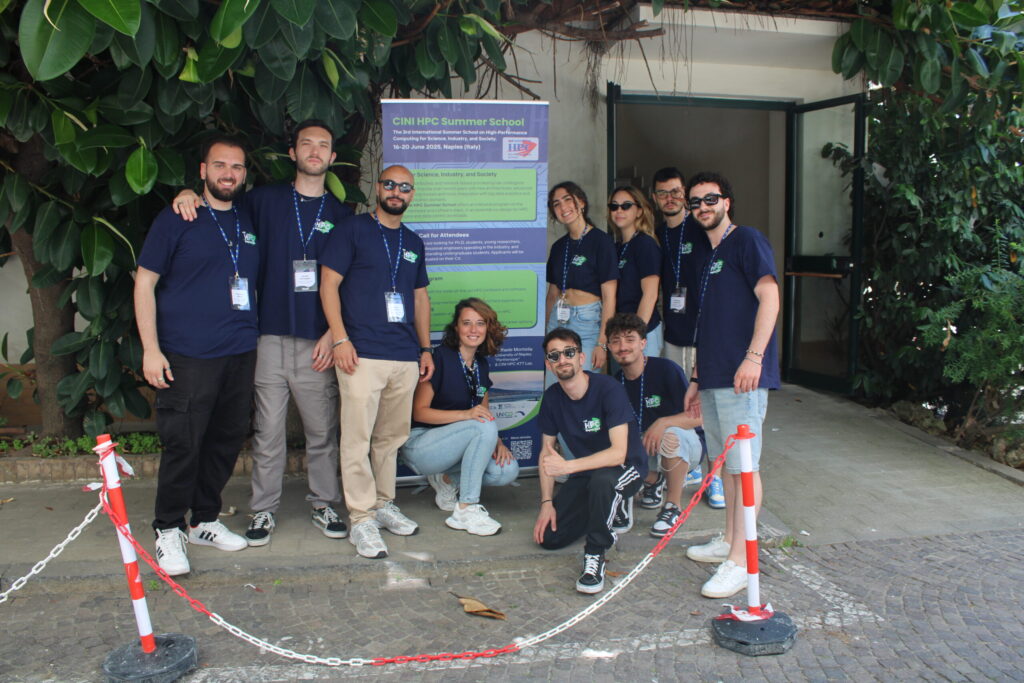
Staff members: Vincenzo Bucciero, Dario Caramiello, Carmine Coppola, Davide De Angelis, Camilla De Martino, Attilio Di Vicino, Gaia Masiello, Francesco Peluso, Simone Perrotta.
Thus, the organization was not only a logistical challenge and a cultural bet but, above all, an investment in the dissemination of technical and scientific knowledge related to High-Performance Computing and in preparing the next generation of experts capable of contributing to the country’s technological and scientific development with unprecedented acceleration.